
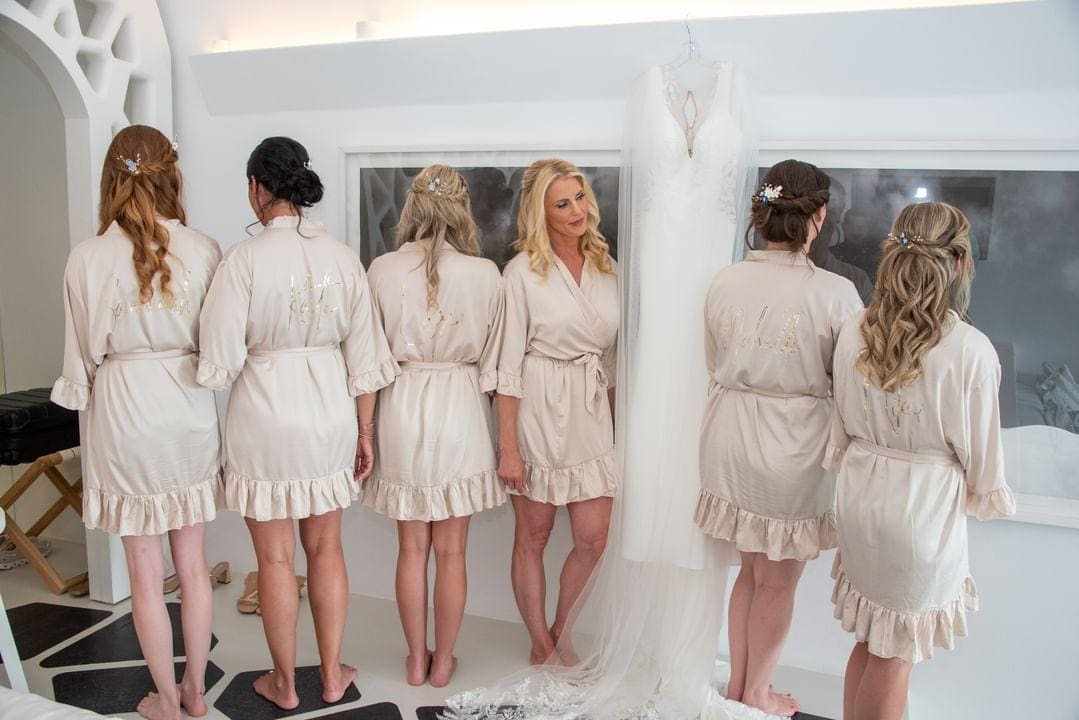
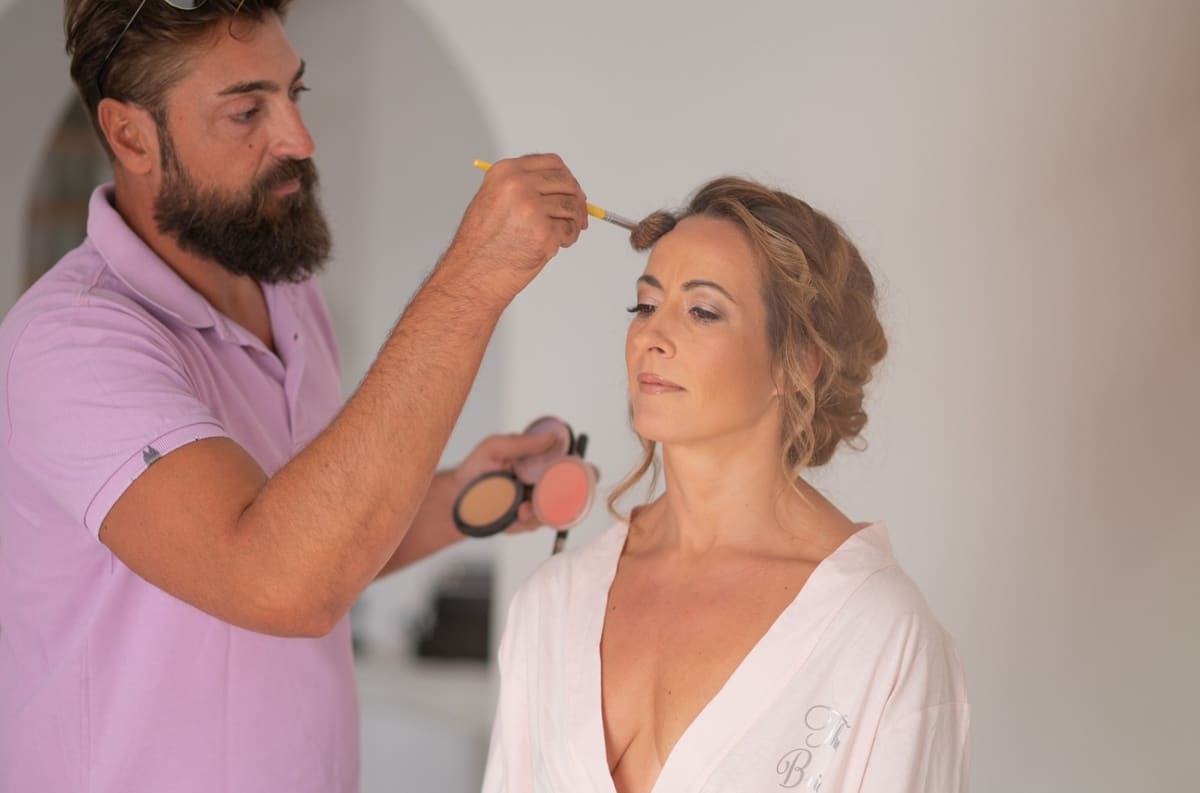
The best Santorini wedding morning timeline is built backwards from the first photograph, and on this island the photograph is anchored to sunset. A caldera suite in Oia, a cave house in Imerovigli, a villa near Pyrgos and the Bridal Lounge each create different demands for stairs, access, wind and transfers.
The plan should connect bridal makeup, hair, the bridal party, dressing, veil placement, photography and transport into one calm sequence. If you are booking the team now, start with our on location bridal makeup and hair service in Santorini, then use this guide to build the morning around your ceremony time and preparation address.
The Short Answer: Start From Sunset
Most caldera ceremonies sit about one hour before sunset, and portraits fill the light around that slot. The bride must therefore be ready well before the ceremony, not at the ceremony. Work backwards from the first portrait and the morning almost plans itself.
- 01 Fix the ceremony time against sunset. The sunset hour sets portraits, and portraits set everything else.
- 02 Fix the first photography deadline. Portraits usually begin before the ceremony, so the bride is dressed and checked earlier than couples expect.
- 03 Protect dressing and veil placement. Stairs and wind make last minute fixes slow, so the final check needs its own buffer.
- 04 Schedule the bridal finishing block. Makeup and hair should come together as one final look, finished close to the portraits.
- 05 Add stairs, wind and transfer buffers. Access on foot, parking distance and a second location all sit inside the beauty schedule.
An Illustrative Santorini Wedding Morning Sequence
The following is an example of how the pieces fit together, not a fixed timetable for every wedding. The final running order depends on the party size, services, photographer, ceremony time and preparation address.
- Team arrival and setup: lighting, stations, products and the running order are ready before the first appointment begins.
- Bridal party services: bridesmaids, mothers and guests are prepared in a sequence that keeps the room moving without using the bride's final buffer.
- Bride's complete look: makeup and hair are finished with the dress, veil, wind direction and photography plan in mind.
- Dressing and veil: the bride changes, final touches are made and the look is checked in the light where the first portraits will happen.
- Portraits and transfer: portraits begin with enough time to reach the ceremony on foot or by car rather than treating the transfer as an afterthought.
Illustrative clock example: if sunset is at 20:30, the ceremony begins at 19:30 and the first portraits are at 18:00, the team might arrive around 13:30, begin party services at 13:45, protect a final bridal beauty block through the afternoon, finish the bride's check by 17:15, allow dressing and veil placement before 18:00, then keep time for the transfer. This is a planning model, not a promise; a larger party, two services per person, a second location or a strong meltemi day moves the start earlier or requires additional artists.
Stairs, Access and Transfers Run the Clock
Santorini mornings are slower than city mornings because much of the caldera moves on foot. Cars rarely reach the door, equipment is carried down steps, and a short distance on the map can mean twenty minutes of stairs with cases and kits.
- Caldera suites: confirm step count, porter help, room size and whether the photographer will share the same terrace.
- Parking and loading: note the nearest vehicle point and who carries kits, dresses and photography gear to the room.
- Second locations: if preparation and ceremony sit in different villages, the transfer becomes a fixed point in the brief, not a flexible gap.
- Guest movement: the party should know when to leave the preparation room so dressing and portraits stay private and on time.
Send the exact preparation address plus photographs of the access as soon as they are known. Our Santorini wedding venue guide explains how terraces, beaches and villas differ for timing and logistics.
Wind and Heat Decide When the Look Is Finished
The meltemi usually builds through the afternoon, exactly when the bride is finishing. Hair that looked perfect at midday can loosen on an exposed terrace, and a complexion set for a cool room can shine in the heat. The schedule should answer the wind rather than ignore it.
Secured hairstyles can be built earlier in the day, while the final makeup check, veil anchoring and portraits sit as close together as the plan allows. A shaded, cool preparation room protects both the look and the mood. The artist keeps a compact retouch kit for the portraits and ceremony. Our heat and wind guide explains the technique behind these choices.
The Best Running Order for the Bride and Bridal Party
The bride should not automatically go first or last. If she is finished too early, the look spends hours exposed to movement, heat, hugs and stairs. If she is left until the last possible minute, there is no space for a change of plan or a calm final check.
With one artist, party services may be scheduled earlier and the bride kept in a protected finishing block. With two or more artists, services can run in parallel, which gives the bride more flexibility and allows the team to finish the group without rushing. For a deeper look at group timing, use our guide to bridal party beauty and running order.
Lounge, Hotel or Villa: What Changes?
The preparation location changes the practical brief even when the beauty look stays the same.
- Bridal Lounge in Pyrgos: controlled light, space for the party and no stairs between stations, with a transfer to the ceremony built into the plan.
- Caldera hotel suite: views and daylight for photographs, but small rooms and terraces that the wind reaches first.
- Private villa: generous space and parking, with pool heat, outdoor exposure and the route to the ceremony to confirm.
- Second property ceremonies: keep the final check before departure, and carry the retouch kit to the venue.
If you are deciding between getting ready at your hotel or in a studio, read our getting ready lounge guide for how the Pyrgos space compares with on location preparation.
The Trial Sets the Island Schedule
The bridal trial is where the visual direction and the island timing begin to meet. Once the artist knows the finish, hair structure, veil and accessories, the wedding morning plan becomes much more accurate, including how much wind the style can take.
Bring the dress neckline, veil, accessories and photography references to the trial. If the hairstyle needs more structure or the skin finish needs adjusting for heat, solve that before the wedding day. Keep your skincare consistent around the trial and wedding; our pre wedding skincare timeline explains how to prepare the skin without creating a last minute problem.
What to Include in Your Santorini Enquiry
A complete first enquiry lets the team give you a useful proposal instead of a generic price. Review the Santorini wedding cost guide for current starting rates, then include:
- Your wedding date, preparation address and ceremony address, with ceremony and photography times.
- Whether you need makeup, hair, both services, a trial, veil support or portrait retouch.
- The number of bridesmaids, mothers and guests, with the services each person needs.
- Your photographer plan, access notes such as stairs or no vehicle entry, and reference images.
The more precise the brief, the more precise the team size, running order and transfer plan can be. That clarity protects both the look and the experience.
A Calm Santorini Morning Is Designed in Advance
There is no single Santorini wedding timeline that fits every couple. The right schedule respects the sunset, the stairs, the wind, the preparation space, the photographer and the reality of moving across the caldera.
If you are planning a Santorini wedding, send your date, preparation location and bridal party details for a tailored beauty proposal and running order.